
When IBM laid off 8,000 employees in 2023, most people saw it as a typical story of corporate cost-cutting—replace human workers with AI to save money. But just two years later, the narrative has flipped. Instead of shrinking, IBM’s workforce has grown. What’s behind this corporate boomerang?
It all started with the launch of AskHR, IBM’s AI platform built to handle routine human resources tasks: payroll, leave requests, and employee documentation. The idea was to automate administrative workloads, reduce overhead, and allow IBM to focus on high-value innovation.
The results were undeniable: over $3.5 billion in productivity gains across more than 70 job roles. But then came the twist—IBM began hiring again. And not just a few roles—nearly as many people as they laid off.
Why Fire and Then Rehire? The Real Strategy Behind the Shuffle
IBM’s CEO, Arvind Krishna, recently explained the logic in an interview: “Automation didn’t reduce our workforce—it freed up capital. We redirected that into hiring people where it matters most: software engineering, sales, and customer engagement.”
In other words, the company didn’t just replace humans with machines. It reallocated resources from repetitive tasks to roles that require strategic thinking, creativity, and emotional intelligence—qualities AI still can’t replicate effectively.
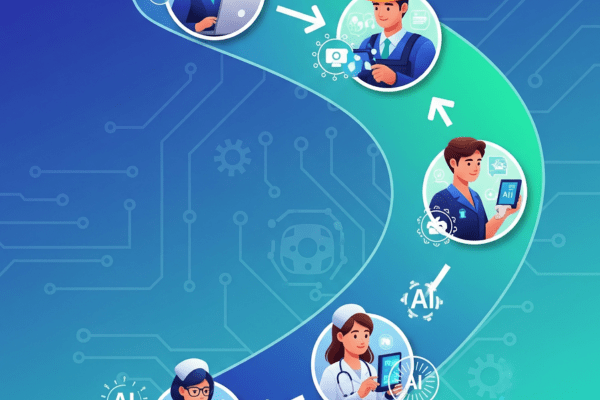
Rather than being an example of AI killing jobs, IBM’s story is turning into a case study in how AI can create new roles by changing how businesses operate.
Is Ai creating new roles?
The IBM story is part of a wider shift in how leading tech companies are approaching AI. While automation continues to take over low-skill, rule-based tasks, it is also unlocking human potential by removing the “busy work.”
Major players like Google, Amazon, and Spotify are following similar trajectories—replacing some functions with automation, only to reinvest in growth areas where human insight is irreplaceable.
And the numbers speak for themselves: IBM’s AskHR processed over 11.5 million interactions in 2024, boosting its Net Promoter Score from a dismal -35 to a remarkable +74. That’s a huge leap in customer and employee satisfaction—driven by AI, but supported by human backup. In fact, about 6% of inquiries still required human input, underscoring the limits of current AI systems.
Balancing AI Automation with a Human Core
IBM’s experience is a clear signal to other industries: The future isn’t about replacing humans—it’s about rethinking where humans add the most value. For IBM, AI didn’t eliminate jobs. It freed the company from outdated structures and enabled a smarter, more adaptable workforce.
This shift is forcing a new way of thinking in the tech industry and beyond. AI is no longer just a cost-saving tool—it’s becoming a strategic partner that enables businesses to scale and innovate, without sacrificing the human touch.
How are jobs evolving with AI ?
The IBM case challenges the conventional fear that AI will destroy jobs. Instead, it presents a more nuanced truth: automation changes the nature of work. Yes, some roles disappear—but others emerge, often more rewarding and impactful.
For businesses, the lesson is clear: embrace AI not to downsize, but to restructure. For workers, the message is just as important: future-proof your career by focusing on skills AI can’t easily replicate—creativity, empathy, complex problem-solving, and innovation.
IBM’s unexpected U-turn may have just set the blueprint for how companies should use AI—not as a blunt instrument to cut costs, but as a catalyst for reinvention.
Follow Media-m for deeper tech insights and future-of-work stories.



 Media M
Leave a comment