
Zero-click search, driven by AI, allows users to find answers directly on search results, reshaping SEO and brand visibility strategies.
The Rise of Zero-Click Search
If you’ve searched on Google recently and didn’t click any result, you’re not alone – this has become the norm rather than the exception in search behaviour. In fact, a growing proportion of searches end without a single click to a website, because the answer is delivered directly on the search results page – or through AI-driven summaries and instant responses. This is what we call zero-click search – and it’s reshaping how users find information and how brands need to optimise for visibility.
In this comprehensive guide, you’ll learn exactly what zero-click search is, why it matters for SEO, real case study examples, and what the future of search looks like in an AI-powered world.
What Is Zero-Click Search?
Zero-click search describes a search session where a user finds the answer they need directly on the search results page – without clicking through to any website. In other words, the search engine or AI system satisfies the user’s intent right there.
This can happen through:
- Featured Snippets – direct answers displayed above traditional listings
- Knowledge Panels – summary info about brands, people, or places
- Maps / Local Packs – with key business data
- AI-Generated Summaries (e.g. AI Overviews)
- Quick Answers (weather, conversions, facts)
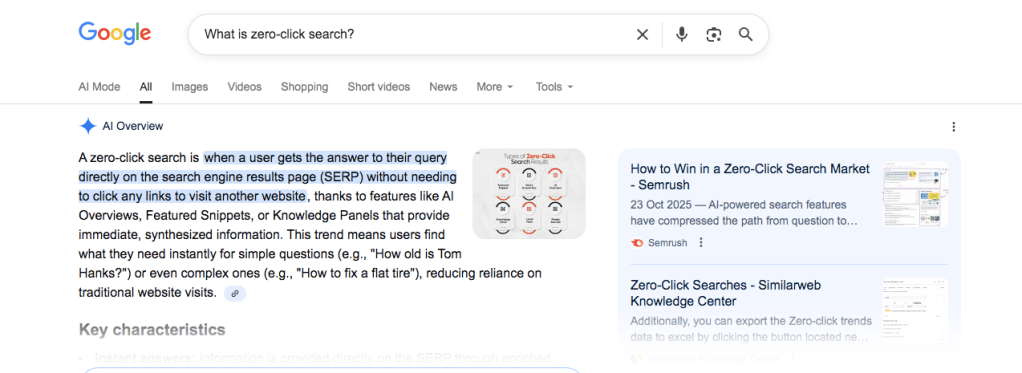
For example, if a user searches “What is zero-click search?”, Google may display a concise explanation at the top that answers the question immediately – eliminating the need to click any link
Why Zero-Click Search Has Exploded
Recent years have seen search engines evolve from simple information directories to answer engines. Several factors drive zero-click growth:
1. AI-Powered Answers
Search engines increasingly use AI models (like Google’s Search Generative Experience) to create comprehensive, conversational responses that satisfy complex queries. These AI responses often sit above organic results, drastically reducing clickthrough rates.
2. Rich SERP Features
Knowledge panels, “People Also Ask” boxes, local packs, and featured snippets – designed to help users faster – now collectively answer a huge share of user intent on the same page.
3. Mobile & Voice Search
On mobile devices – where most searches happen – users tend to accept instant results more often, driving up zero-click behaviour.
Zero-Click Search by the Numbers
Here’s what recent data tells us about how common this trend has become:
- Around 57–60% of Google searches now end without clicking a website link.
- Mobile zero-click rates can be even higher than desktop.
- When AI Summaries are shown, only a small fraction of users click traditional links.
This isn’t a temporary blip – it’s being projected that zero-click searches will continue rising as AI and new search interfaces (voice, visual search) become more prevalent.
Case Studies: Zero-Click Search in Action
Case Study 1 – A News Publisher Impacted
A large analysis of topical queries showed that when AI Overviews appear, organic CTR can drop by more than 60%, drastically shrinking traffic to news sites even when they ranking highly. I recently wrote about the impact for news agencies , you can read more here >
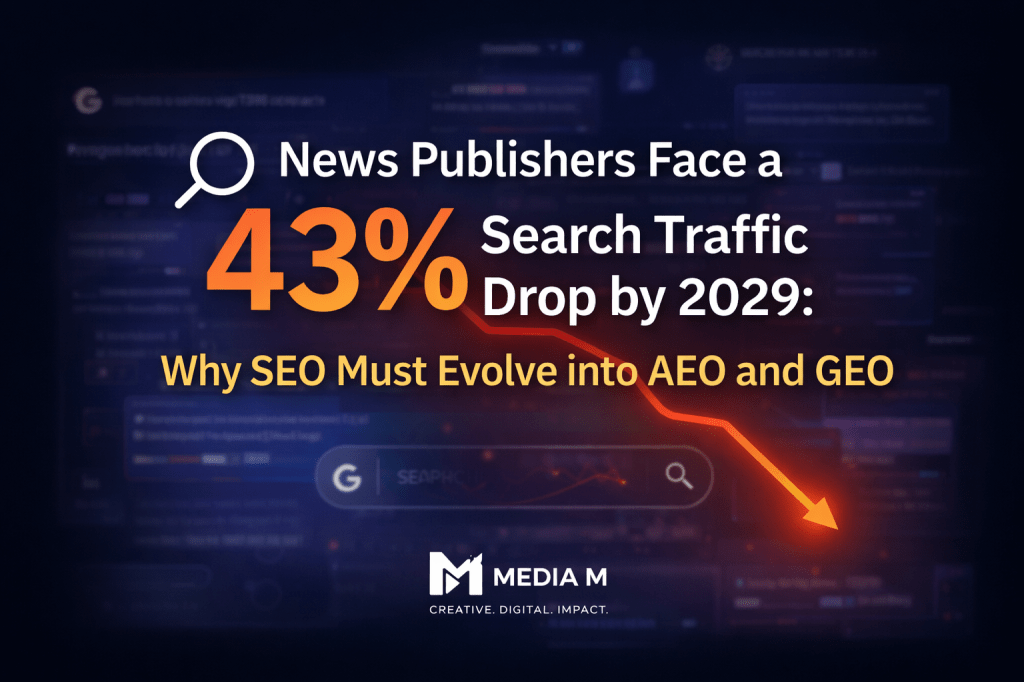
Insight: Ranking #1 isn’t enough if users get the answer before they scroll to your link.
Case Study 2 — Local Business Visibility
Local businesses often rely on organic traffic for discovery. When Google displays a local business profile with hours, reviews, and “call” buttons, many users interact without clicking through to the firm’s site – yet they may still convert offline (calls, visits).
Insight: Zero-click search doesn’t always cost conversions – it just shifts where they happen.
Case Study 3 – AI Summaries and E-Commerce
Product and category pages that are cited within an AI answer box can gain frequent brand exposure even without clicks – helping build brand awareness and consideration earlier in the customer journey.
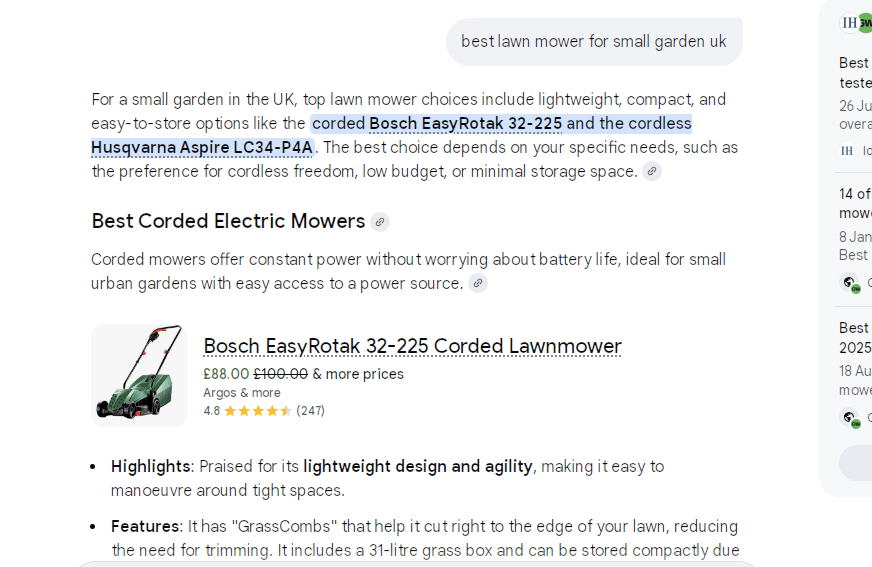
Insight: Brands increasingly benefit from being referenced in AI responses, not just clicked. In the above example – Bosch EasyRotak model dominates the AI Search query -‘ best lawn mower for small garden UK’. The new search competition is to make sure your brand or product appear first here. Users are trusting more and more AI answer and this can lead to high conversation rates.
How Zero-Click Search Changes SEO & Marketing
Zero-click search fundamentally shifts how visibility and success are measured. Here’s how:
1. Traffic Isn’t the Only Metric
Traditional KPIs like organic traffic or clickthrough rates are no longer sufficient. You must now measure:
- SERP real estate share
- AI answer inclusion
- Feature visibility
- Brand mentions in AI responses
2. SEO Has Become “Answer Engine Optimisation”
Instead of optimising just for keywords and links, smart content is structured to get featured within the answer itself – concise, accurate, and rich in context.
This includes:
- Clear definitions & summaries
- Structured markup (schema)
- High-quality data that AI systems trust
Strategies to Win in a Zero-Click World
Optimise for SERP Features
Focus on featured snippets, knowledge panels, and structured data so your content is more likely to be selected for instant answers.
Create AI-Friendly Content
Break down articles into logical sections, answer common questions early, and embed data that AI models can use reliably.
Diversify Channels
Relying solely on Google organic traffic is risky. Expand to:
- Social platforms
- AI assistants (ChatGPT, Gemini)
- Email and direct channels
- Other search platforms
Monitor Brand and AI Mentions
Tools that track where AI cites your content help you understand how often your domain is being referenced – even if clicks don’t happen.
The Future of Search with Zero-Click
The trajectory is clear: search is shifting from a click-driven web gateway to an AI-driven answer ecosystem. Here’s what to expect:
1. More Instant Answer Interfaces
Voice, AR/VR, and conversational AI will make zero-click interfaces even more dominant, especially on mobile and smart devices.
2. SEO and AI Integration
SEO will increasingly blend with AI optimisation – sometimes labelled Answer Engine Optimisation (AEO) and Generative Engine Optimisation (GEO) – where being cited by AI models wins over rankings alone.
3. Evolving Success Metrics
Clicks still matter – but brand visibility, engagement, and conversions beyond clicks will define performance in 2026 and beyond.
Zero-Click Era is Here!
Zero-click search is the new baseline of how search works in an AI world. For brands and marketers, this means moving beyond traditional SEO towards strategies that prioritise visibility, trust, and AI answer inclusion. Yes, users may click less – but with the right approach, you can still win attention, trust, and ultimately conversions without them ever leaving the SERP.

 Media M
Leave a comment