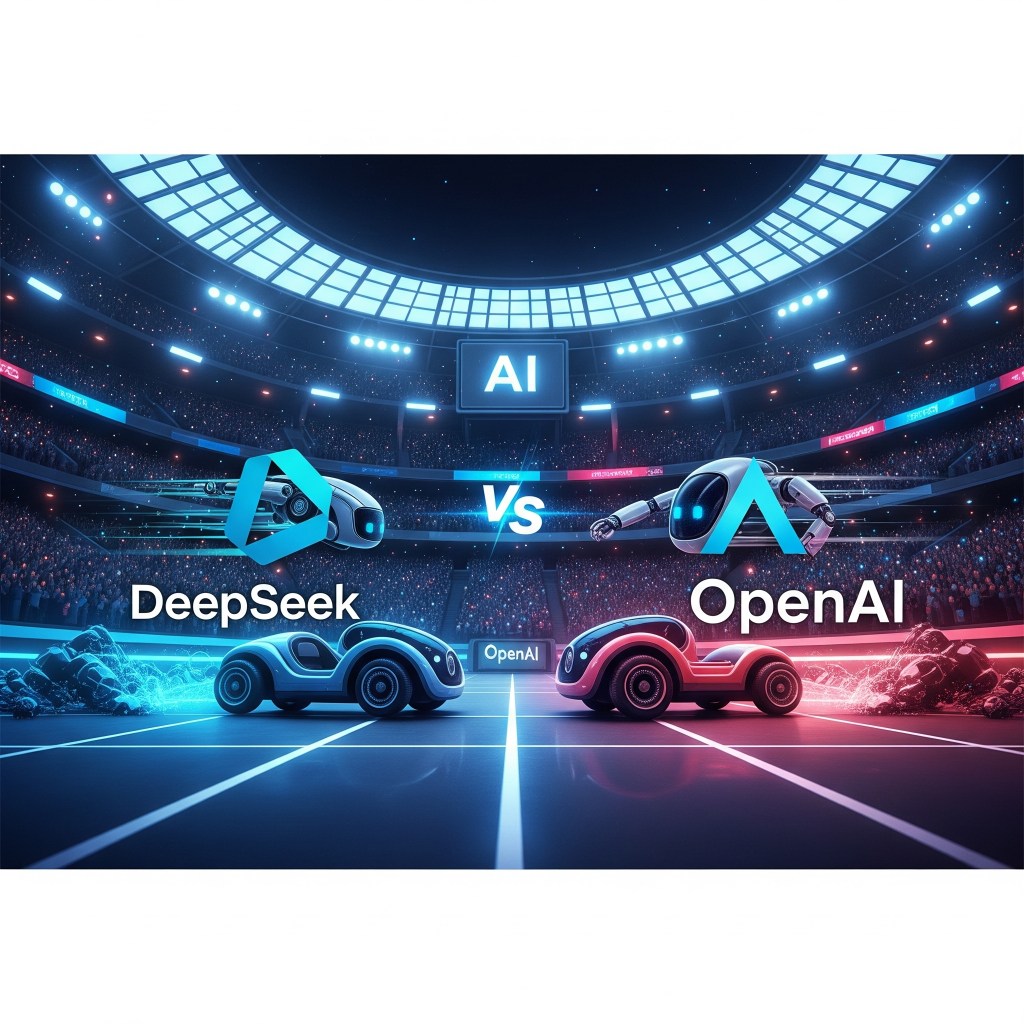
Is OpenAI in Trouble – And Who Else Is Threatening Its AI Dominance?

The artificial intelligence race has never been more intense. OpenAI, long considered the undisputed frontrunner thanks to the success of ChatGPT and its GPT-4 series, is now facing an accelerating wave of challengers. One of the most intriguing is DeepSeek, a Chinese-based company that has quickly entered the global stage with some serious computational firepower.
So what’s behind the DeepSeek hype, and is OpenAI’s dominance really under threat? Let’s break it down.
Meet DeepSeek: China’s Bold New Challenger
DeepSeek burst into the global AI conversation in 2024 with a suite of open-source large language models (LLMs) that are already making waves among researchers and developers. The standout? DeepSeek-V2 and the more recent DeepSeek-Coder V2, a code-centric model trained on 6 trillion tokens.
What makes DeepSeek stand out?
- Open-Source Strategy: Unlike OpenAI’s closed model approach, DeepSeek is freely releasing weights and architecture, appealing to the growing open-source LLM community.
- Impressive Performance: In code benchmarks, DeepSeek-Coder V2 competes head-to-head with GPT-4 and Claude Opus. It even surpasses GPT-4 in certain programming tasks like HumanEval and MBPP.
- Rapid Development: DeepSeek has gone from unknown to cutting-edge in under a year – a development pace that echoes the speed at which OpenAI itself once moved.
The bottom line? DeepSeek isn’t just another research lab. It’s a state-backed, well-funded player with access to serious compute resources – and it’s not hiding behind a paywall.
Is OpenAI in Trouble?
Let’s be clear – OpenAI is still the leader in conversational AI. GPT-4.5 powers ChatGPT with unmatched user experience, and the integration into Microsoft products via Copilot gives it a massive distribution edge.
But the threats are stacking up:
- Technical Parity Is Approaching
Claude 3 Opus (Anthropic), Gemini 1.5 (Google), Mistral’s Mixtral models, and now DeepSeek all hover around GPT-4 levels of capability. GPT-4.5 is slightly ahead – but the margin is thinner than ever. - Open-Source Ecosystem Is Exploding
Meta’s LLaMA 3 models are now becoming the de facto base for open-source innovation. They’re free, fast, and extremely capable. DeepSeek and others are feeding that momentum. - Developer Loyalty Is Fragmenting
With models like Mixtral and DeepSeek being open and customizable, developers are migrating away from OpenAI’s API lock-in – especially in markets like China, India, and parts of Europe where data sovereignty matters. - Trust & Transparency Questions
OpenAI has come under fire for its secrecy, boardroom drama, and safety communication (or lack thereof). Competitors are leaning into transparency as a marketing differentiator.
So yes, while OpenAI is not “in trouble” per se, its dominance is no longer a given. The moat is shrinking.
Other Key Threats to OpenAI
Besides DeepSeek, here are the major names rewriting the AI landscape:
1. Anthropic (Claude)
With Claude 3 Opus, Anthropic offers high-context reasoning (up to 200K tokens) and exceptional safety alignment. Google and Amazon are backing them heavily.
2. Google DeepMind (Gemini)
Gemini 1.5 is a major leap forward and integrates deeply with Google’s ecosystem. With YouTube, Docs, and Search as testbeds, Google’s play is long-term dominance via ubiquity.
3. Meta (LLaMA)
Meta’s strategy is clear: flood the market with capable open-source models. LLaMA 3 is now powering everything from startups to academic labs.
4. Mistral
A French startup that’s punching far above its weight. Their Mixtral 8x22B model offers efficient mixture-of-experts architecture and rivals GPT-4 for many use cases – and it’s open-source.
5. xAI (Elon Musk)
With Grok integrated into X (Twitter), and Tesla’s AI for robotics and autonomy, Musk is building a full-stack AI ecosystem with serious ambition – though the actual models still lag behind GPT-4.
What’s Next?
OpenAI still has key advantages:
- Massive User Base (100M+ via ChatGPT)
- Microsoft’s Ecosystem Integration
- Early Mover Brand Power
- Strong Multimodal Capabilities (GPT-4o)
But it’s no longer the only serious player in town. The competitive field is now populated by fast-moving, well-funded, open-source-savvy competitors. DeepSeek is just the latest in a line of challengers that are eroding OpenAI’s lead in everything from code to reasoning to customisation.
Can OpenAI Stay on Top?
OpenAI isn’t going away anytime soon – but if it wants to stay on top, it needs to do more than just ship new models. It must:
- Open up to developers and the open-source world
- Maintain user trust and model transparency
- Continue investing in truly multimodal, agentic AI systems
The AI arms race is now a marathon – not a sprint. DeepSeek might not knock OpenAI off its perch overnight, but it’s a loud wake-up call. In 2025, “dominance” isn’t a guarantee – it’s something you have to fight to keep.
Follow Media-M for more insights into AI trends, model showdowns, and the future of generative tech.


 Media M
Leave a reply to DeepSeek vs OpenAi: How do they compare? | London Daily News Cancel reply